CRM for Insurance Agents
The CRM that works your book while you write policies.
Quotes that aren't chased expire. Renewals that aren't touched churn. AutomateNexus CRM scores new leads, drafts the follow-ups, and drafts renewals before a term ends, across your whole book.
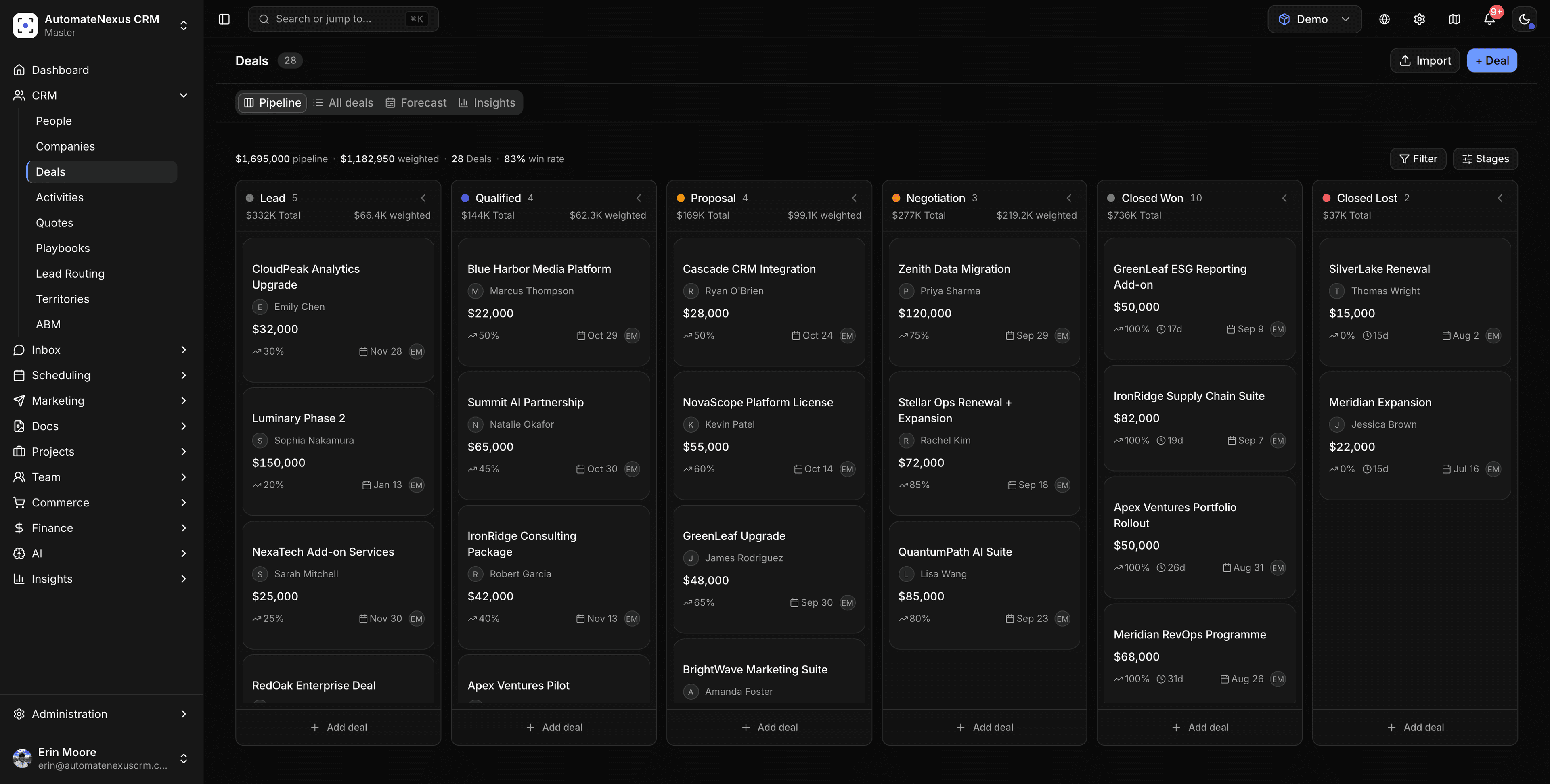

Where insurance pipelines leak.
- 01
Quote follow-up dies by Friday
Prospects request quotes from three agencies; the one that follows up twice wins the policy.
- 02
Renewals sneak up
A book of business churns quietly when renewal outreach depends on someone remembering.
- 03
Every carrier, another tab
Client context scatters across raters, carrier portals, and inboxes — the CRM should be the one source of truth.
Built for how insurance agents actually sell.
Leads scored and chased
The AI SDR agent scores inbound leads against your ideal customer profile, and Karrie drafts the quote follow-up sequence. You approve, it runs.
Renewals flagged early
Agents watch renewal dates and stale contacts, and queue the outreach before a policy lapses.
Calls and texts on the record
Built-in telephony via Twilio logs every call and SMS to the right policyholder automatically.
The whole book, one view
Pipeline by stage, at-risk flags, and revenue forecasting across your entire book of business.
How an insurance pipeline runs.
How an agency works its book on AutomateNexus CRM, from the quote request to the renewal.
- 01
Quote request in
A form, a call, a text, or a lead-vendor email becomes a scored lead. Rater and carrier data comes in through Zapier, Make, n8n, or the API.
- 02
Follow-up that doesn't quit
Karrie drafts a quote follow-up sequence by text and email. You approve once; it runs until the prospect binds or says no.
- 03
Bound and onboarded
The policy record carries effective and renewal dates, documents, and the calls and texts that led there.
- 04
Renewal, 60 days out
Automations flag renewals by date, queue outreach to the agent and the policyholder, and surface cross-sell openings.
- 05
Service without the phone tag
Routine requests land in the unified inbox with an AI draft ready; anything involving coverage goes to a human.
The agents that work an insurance pipeline.
Every plan includes Karrie and seven specialists. These are the ones insurance agents lean on most, with your approval on anything sensitive and an audit trail on everything.
See how the agents work- A1KarrieAI Co-PilotDrafts the quote follow-up sequence for your approval.
- A2SalesCloserWorks quotes to a yes or a no and books the call when the prospect is ready.
- A3SchedulerPlannerRuns renewal reviews and reminders by date.
- A4SupportResolverDrafts replies to routine service requests in the inbox.
- A5AnalyticsForecasterForecasts retention and shows which sources actually bind.
The tools insurance agents already use.
- 01TwilioCalling, SMS, WhatsApp and the AI receptionist on your own Twilio account.
- 02WhatsAppWhatsApp through your Twilio sender, in the same inbox as SMS and email.
- 03GmailSign in with Google to log recent mail to the timeline; send from your address via SMTP.
- 04OutlookRecent mail logged to the timeline, Outlook Calendar synced every 15 minutes.
- 05Google CalendarTwo-way sync every 15 minutes, with booking pages that read it.
- 06ZapierTrigger Zaps from twelve CRM events and write records back through the REST API.
- 07MakeWebhooks trigger your scenarios; the HTTP module writes records back.
- 08StripeInvoices, bookings, products and forms paid through Stripe Checkout.
- 09Google DriveAttach Drive files to records and the client portal.
What to look for in a CRM for insurance agents.
Whether or not you choose us, hold every vendor to these.
Renewal dates that drive automations
A renewal date should be a trigger, not a spreadsheet column. Ask to see a sequence fire from a date field before you sign.
Texting and calls on the record
Every call and text should log to the policyholder without anyone typing a note, with the recording or thread one click away.
A sequence builder you'll use
Multi-step follow-ups by text and email, built on a canvas by the agent who runs them, not by a developer.
Room for your rater
No CRM has every carrier or rater natively. Look for a real REST API, signed webhooks, and connectors for Zapier, Make, and n8n so quotes land on the record.
Multiple lines, one view
Personal, commercial, and life should run in separate pipelines with their own stages and sequences, then roll up into one report on the whole book.
CRM for insurance agents, answered.
Further reading: our full guide to choosing the best CRM for insurance agents.
Yes — every quote request becomes a scored lead with a drafted follow-up sequence. Karrie writes the touches; your agents approve and the system runs them.
Renewal dates drive automated reminder sequences for both the agent and the policyholder, and stale relationships get flagged before they churn.
Yes — telephony is built in via Twilio: click-to-call, two-way SMS, and automatic logging to the client record.
From $49/month with unlimited contacts and no per-seat fees. Agencies can also white-label the platform on every plan.
Not natively, and no CRM covers every carrier. Raters and lead vendors connect through Zapier, Make, n8n, or the REST API, so quotes and leads land on the record without re-keying.
Yes. Two-way SMS runs through Twilio, and WhatsApp is available as a channel. Renewal outreach can go by text, email, or both.
Yes. Buy numbers per agent or per team through the built-in telephony, and route inbound calls and texts by number.
Yes. Each line gets its own pipeline, stages, and sequences, with reporting across the whole book.
Put the agents on your insurance pipeline.
Start your 7-day free trial. No credit card. Karrie is ready on day one.